Could We Build a Virtual Fly With a Real Brain Map?
Exploring an ambitious FlyBrain Simulator concept using the FlyWire connectome, and the crucial distinction between mapping neural connections and simulating a living nervous system.
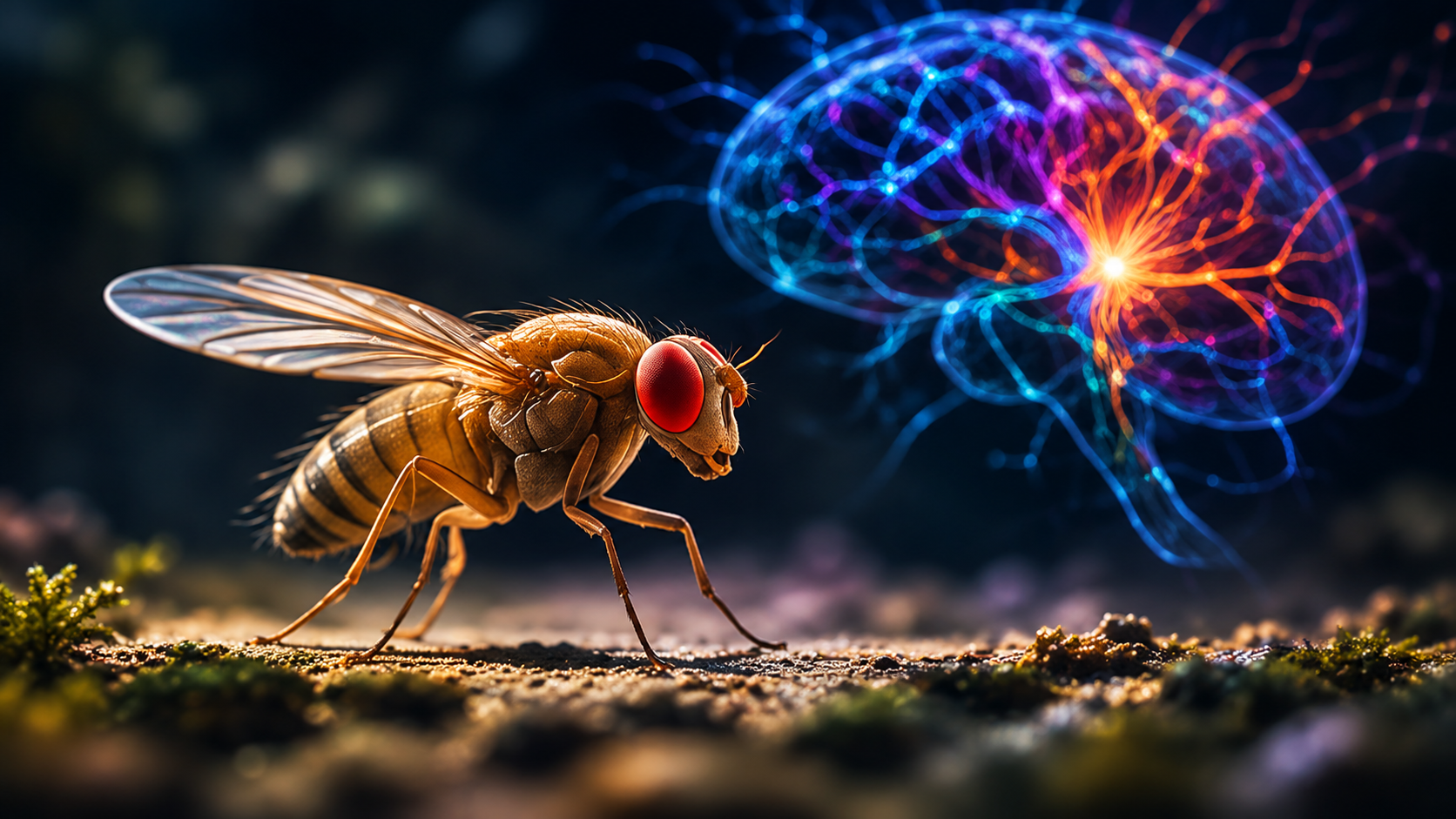
What if we could construct a digital animal whose behavior emerges from a biologically inspired nervous system rather than a collection of hand-written game rules?
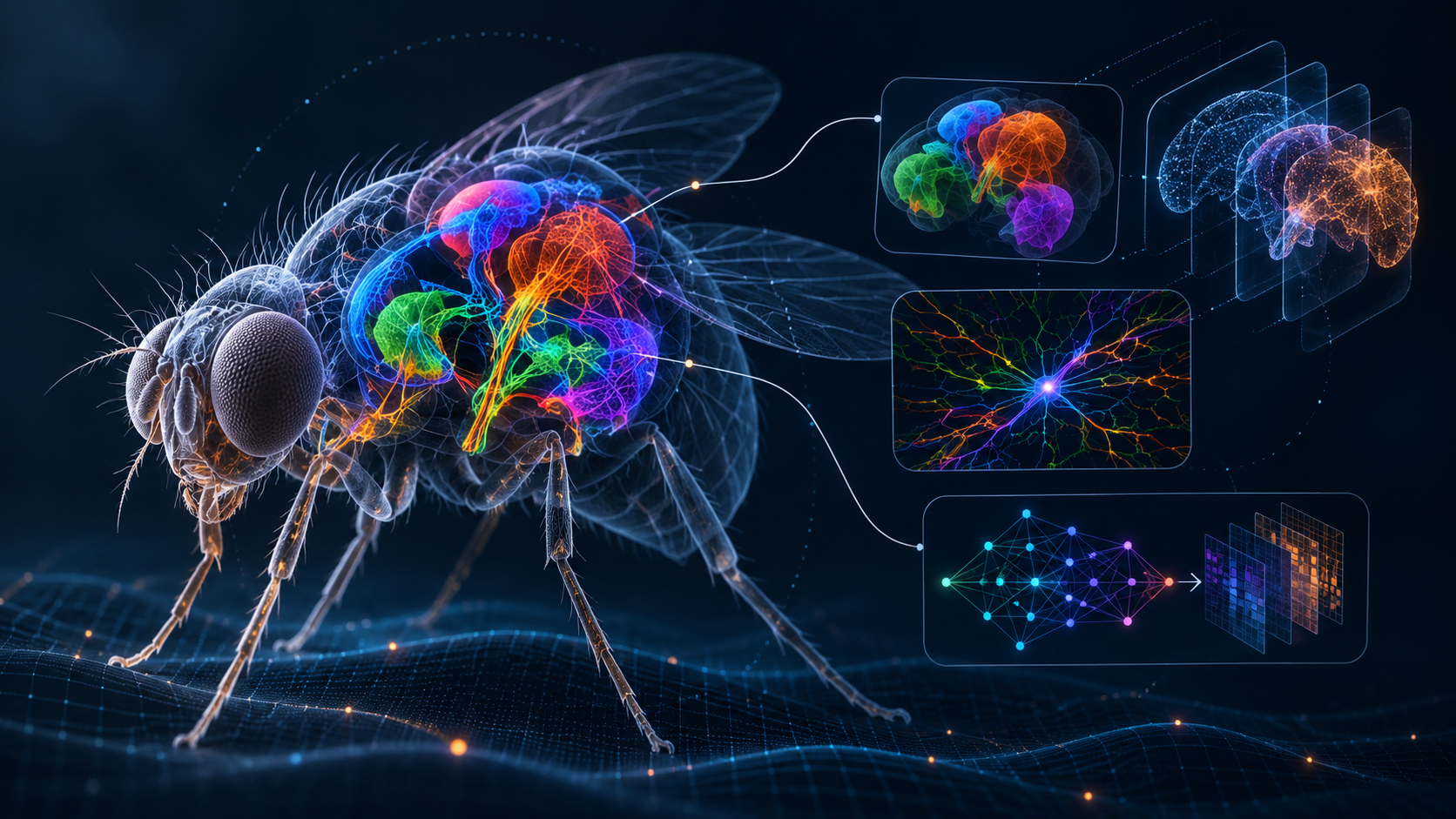
That question led me to a project idea combining three elements: a FlyBrain Simulator for neural dynamics, a Virtual Fly that interacts with a 3D environment, and an interactive Brain Explorer for studying the underlying neural network.
The inspiration is real scientific progress. In 2024, the FlyWire collaboration published a connectome of an adult fruit fly brain containing approximately 139,255 neurons and 54.5 million synapses. That is a remarkable wiring map—but turning it into a functioning simulation is a completely different problem.
A connectome is a map, not a running brain
A connectome records which neurons are connected and provides information about the structure of those connections. It does not automatically specify all the electrical behavior, biochemical states, synaptic strengths, or sensory feedback of a living nervous system.
If we loaded the graph into a visualization and animated signals moving along edges, we could create an impressive picture. We could not truthfully claim to have reconstructed a thinking, behaving fly.
This distinction would shape the project from the beginning: separate what comes directly from scientific data from what is assumed by a simulation model.
Three connected applications
Brain Explorer would be the most grounded starting point. Users could search for cell types, inspect connectivity, isolate circuits, and navigate a complex 3D representation. It would need level-of-detail rendering, careful filtering, and a way to highlight specific pathways without displaying every connection at once.
FlyBrain Simulator would add dynamics. Initially, the system might use simplified neuron models rather than pretending to reproduce every biophysical mechanism. The simulator would need explicit parameters, time steps, numerical stability checks, and validation against published experimental observations where possible.
Virtual Fly would provide a body and environment. A fly model could receive simulated visual and sensory inputs and produce motor outputs that affect movement in a 3D scene. The first version should be modest: a constrained movement task or simple orientation response, not an ambitious claim of complete animal behavior.
How to architect the experiment
I imagine a pipeline with four layers:
- Data ingestion: load published neuron identifiers, connectivity, and annotations, preserving provenance.
- Neural representation: store a sparse graph and group components by region or cell type.
- Dynamics: update neural states using explicit, documented mathematical assumptions.
- Embodiment: translate selected sensory inputs and motor outputs into a virtual environment.
One engineering challenge is scale. Tens of millions of synapses can consume significant memory and compute, especially if the model stores dynamic state for each connection. Sparse formats, batching, and careful profiling would matter more than simply choosing a flashy renderer.
A second challenge is scientific validity. Even if the simulation runs at interactive speed, it may produce behavior that has no biological basis. Speed and fidelity are separate metrics.
What should count as progress?
A sensible roadmap would begin with verifiable milestones. Can the software load a subset of the dataset correctly? Do graph queries reproduce published counts? Can a simple neuron model generate expected dynamics on a toy circuit? Does a virtual body respond consistently to a defined signal?
Only then would I try to connect larger functional circuits to behavior.
I would also publish an assumptions document identifying parameters that are estimated, missing, or simplified. Without that, an attractive visualization could be mistaken for a scientific result.
Why the idea matters beyond one insect
The combination of graph analysis, numerical simulation, machine learning, and 3D visualization is useful well beyond neuroscience.
It raises questions about how intelligence emerges from connected components, how we compare biological and artificial networks, and how much detail a model actually needs to reproduce a useful behavior.
It also offers an opportunity to build tools that make public scientific datasets easier to explore.
Final thoughts
This is still an exploratory project concept, not a claim that I have recreated a living fly's brain.
The part I find exciting is precisely the gap between what scientists have mapped and what software can currently simulate. Building honest tools around that gap could be more valuable than making exaggerated claims about digital consciousness.
A wiring diagram is an extraordinary beginning. Understanding how it produces behavior is the much harder journey.