Nine Billion DNA Changes: What AlphaGenome Atlas Actually Means
AlphaGenome Atlas is a striking example of AI applied to biology. But predicting molecular effects is not the same as predicting disease—and that distinction matters.
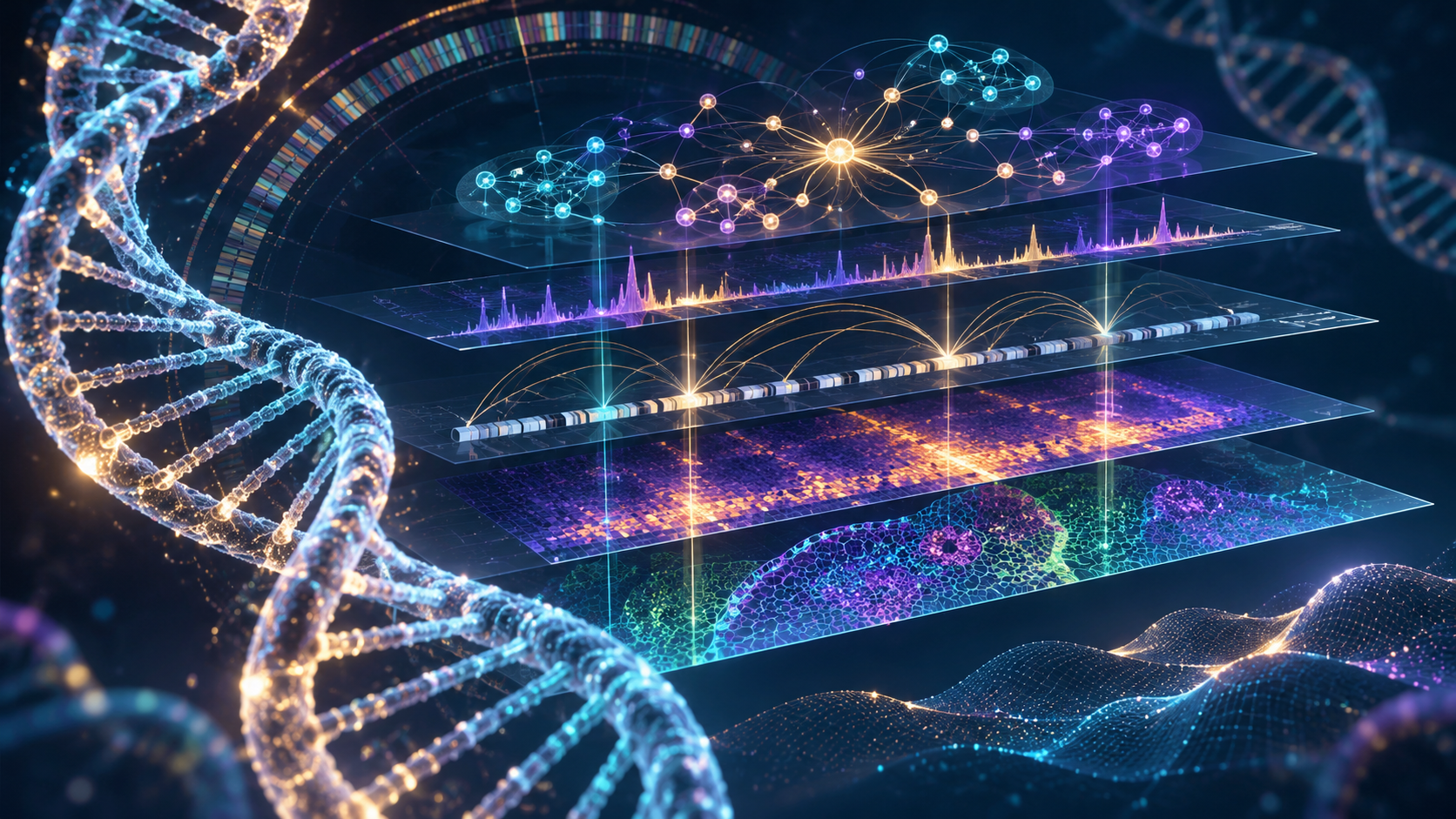
DNA contains an enormous amount of biological information, but understanding what each part does remains difficult. A change of one nucleotide may have little effect—or it may influence how a gene is regulated, which molecules are produced, and how cells behave.
On 8 September 2026, Google DeepMind introduced AlphaGenome Atlas, a resource containing model-based predictions about approximately nine billion possible single-letter variants in the human genome.
It's an impressive scale, and an exciting example of machine learning being applied to scientific discovery. But the most important detail is the word predictions.
Why a single DNA change can be complicated
The human genome contains roughly three billion base pairs, and only a small fraction directly codes for proteins. Much of the remaining DNA includes regulatory regions and other sequences that affect how genes are expressed.
A mutation in a protein-coding region may directly change an amino acid. A change outside a coding region might influence when, where, or how strongly a gene is activated. Those effects can depend on cell type, biological context, and many other factors.
That makes it difficult to interpret variants solely by looking at their location in the sequence.
What a model can contribute
Models like AlphaGenome are designed to learn patterns connecting DNA sequence to molecular properties. By comparing alternative sequences, researchers can estimate how a particular change might affect a predicted biological feature.
An atlas of many possible variants makes it easier to investigate hypotheses systematically. Instead of running a separate costly experiment for every candidate, scientists can use model outputs to prioritize variants that deserve closer attention.
The value is in guiding research, not replacing experimental biology.
This is especially relevant when the search space is enormous. Even modest improvements in how researchers prioritize hypotheses could make laboratory work more targeted.
Nine billion predictions are not nine billion verified facts
The headline number is easy to misunderstand. The atlas does not mean scientists have experimentally tested every possible mutation in every relevant cell or organism.
The predictions come from a computational model, which inherits limitations from its training data, objectives, and evaluation methods.
A high-confidence molecular prediction is also not the same as a diagnosis. Whether a variant contributes to a disease may depend on context, interactions with other variants, environmental conditions, and evidence beyond the model's output.
This distinction is essential when AI research is discussed in medical settings. Scientific potential should not be confused with established clinical utility.
The relationship to AlphaFold
AlphaFold helped popularize the idea that machine learning could solve challenging prediction problems in structural biology. AlphaGenome addresses a different problem: understanding how DNA sequence variation relates to molecular function.
The connection is not that one model replaces the other. It's that biology increasingly benefits from tools that predict different layers of a complex system—from sequence effects to molecular structures and beyond.
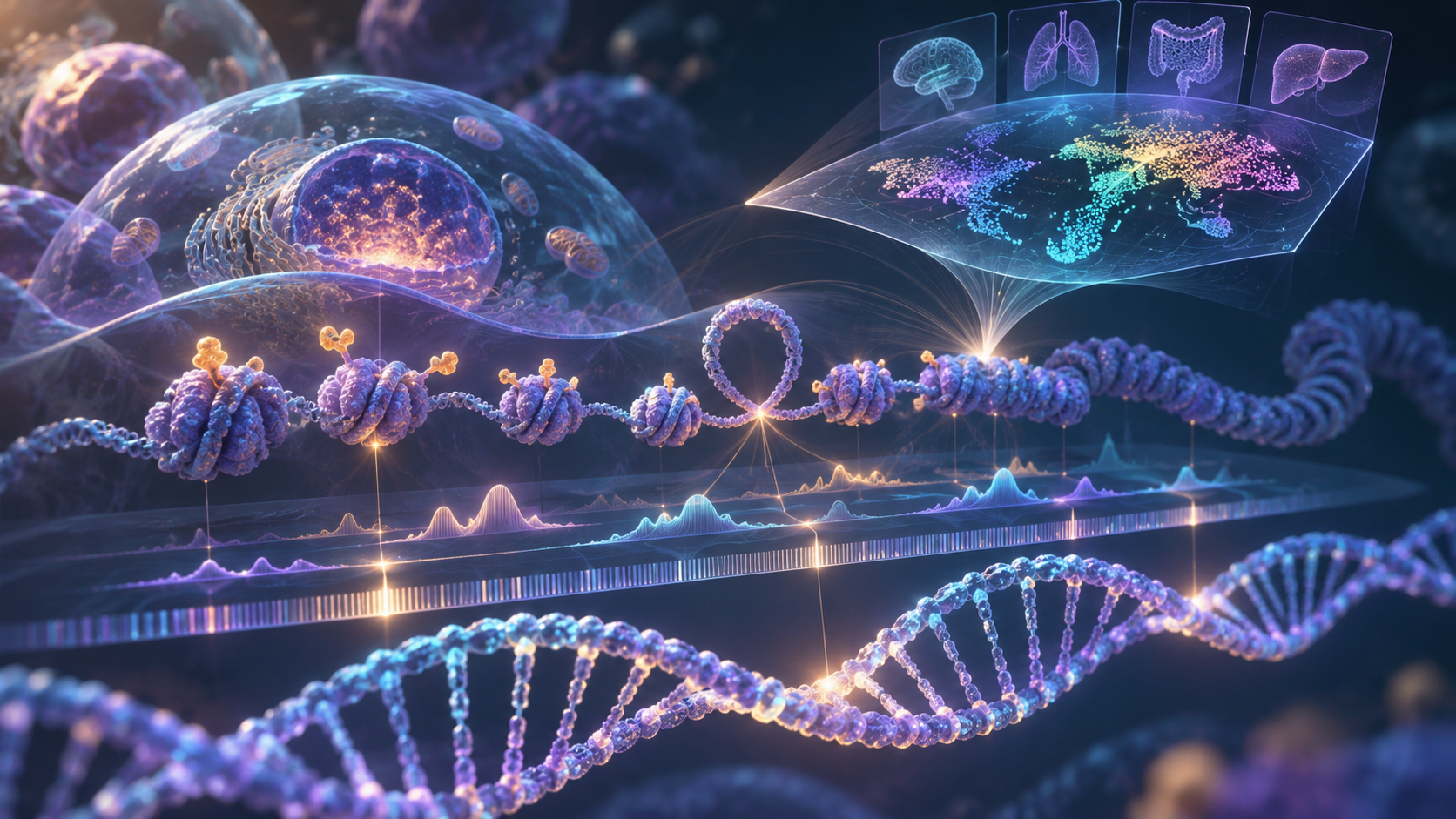
Each tool answers particular questions and requires its own validation.
Why open scientific resources matter
A prediction system becomes substantially more useful when researchers can explore its outputs, compare them with existing evidence, and investigate where it is wrong.
DeepMind described AlphaGenome Atlas as accessible for academic research through a dedicated portal. Resources like this can broaden access to computational predictions, although access conditions and appropriate use still matter.
The next question is how the scientific community evaluates performance across different tissues, variant types, and biological tasks—not merely how large the database is.
What I find most interesting
As someone interested in artificial intelligence and data engineering, I find the infrastructure challenge nearly as fascinating as the model itself.
Generating, storing, indexing, and serving predictions at this scale requires careful data pipelines and interfaces. Research value depends on making results searchable, reproducible, and interpretable.
It's a reminder that impactful AI often requires excellent engineering around the model.
Final thoughts
AlphaGenome Atlas represents a promising step toward exploring the functional consequences of genetic variation at scale. The exciting part is not that AI has “decoded human biology.” It hasn't.
The exciting part is that researchers have another powerful instrument for deciding which questions to ask next.
Prediction can accelerate discovery. Evidence is still what turns an interesting prediction into reliable scientific knowledge.