Genie 4 and the Rise of AI-Generated Interactive Worlds
Google DeepMind’s October 2026 world-model announcement points toward environments that respond to actions in real time. Here is what makes that different from video generation—and what remains unsolved.
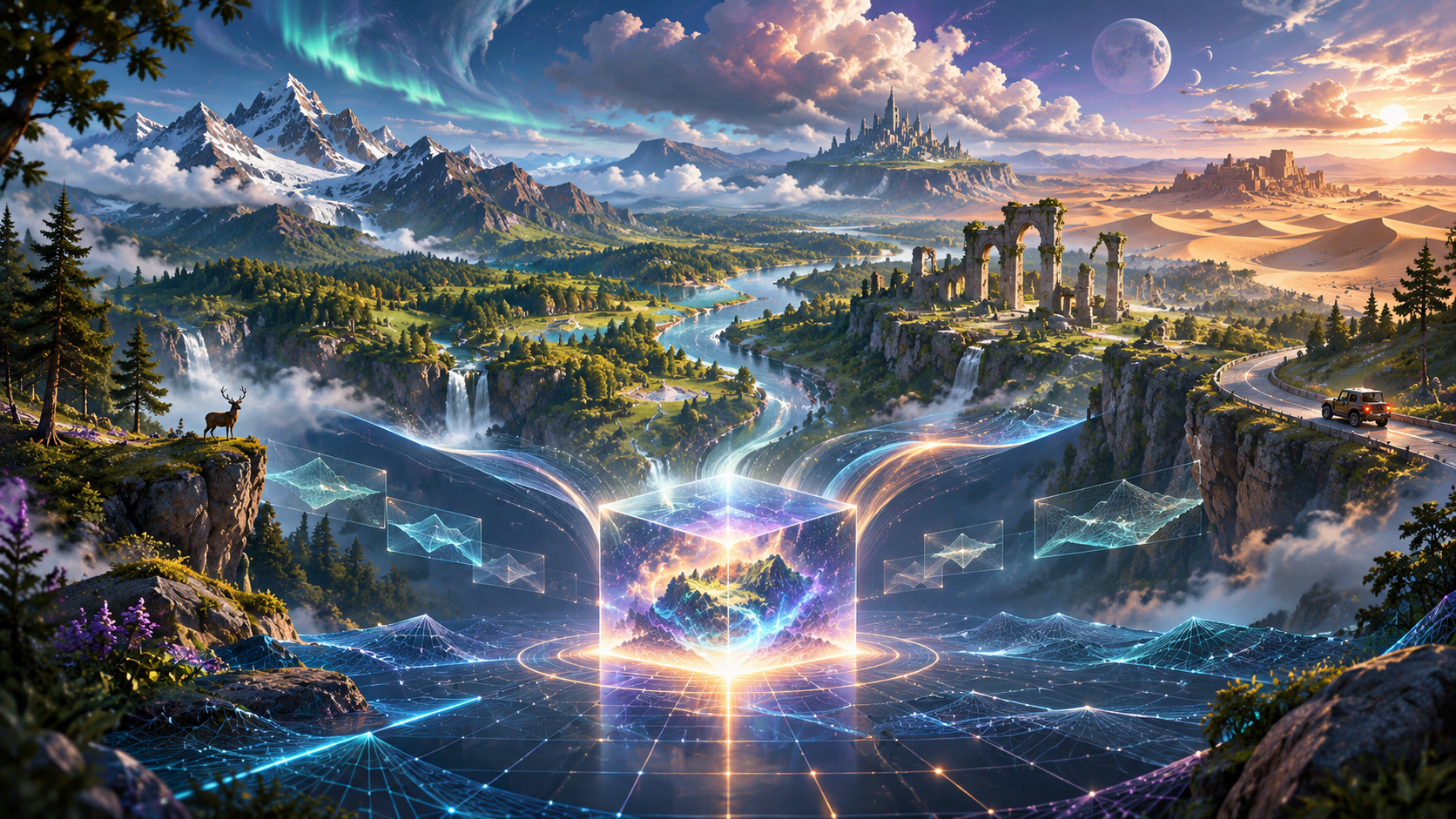
Generative AI has become remarkably good at producing images and videos. But a video is usually a fixed sequence: once generated, the action has already been decided. A game or simulation is different. It needs to respond when someone moves, changes the environment, or does something unexpected.
That distinction is why I find world models one of the most interesting areas of AI research.
On 27 October 2026, Google DeepMind announced Genie 4, describing a new generation of interactive world simulation with more realistic scenes, real-time control, and generated audio. The demonstration is compelling, but the deeper question is what it means for a model to represent a world rather than simply render one.
From predicting pixels to predicting consequences
A conventional video generator creates a plausible sequence of frames. An interactive world model must also respond to input.
If a user moves forward, the camera should move through the scene. If a character opens a door, the system should maintain enough continuity for the action to make sense. If the weather changes, lighting, movement, and sound should react coherently.
In other words, the model is attempting to represent how the environment evolves in response to actions.
That does not mean it has learned an exact physics engine. Visual plausibility and physical correctness are different properties, and a model can produce convincing motion while violating real-world constraints.
What Genie 4 adds
DeepMind's announcement emphasizes interactive control, scene coherence, and native multimodal output, including audio that accompanies the generated environment. It also describes the use of models from the Gemini family to help maintain continuity and interpret complex instructions.
The fascinating part is the possibility of changing a world while interacting with it: moving the camera, introducing new events, or altering the setting through language rather than constructing every scene manually.
At the time of the announcement, access was described as limited, with broader availability planned for later. The published demonstrations should not be mistaken for a universally available game engine or proof that arbitrary long simulations are already solved.
Why this could change game development
Traditional games require assets, environments, animation, collision rules, behavior systems, and carefully designed interactions. World models could eventually make some parts of content creation more flexible.
Consider a prototype in which a designer can describe a forest, walk through it, ask for a storm, and see the environment respond. Even if the result needs substantial refinement, that could shorten the gap between an idea and a playable experiment.
But games also need repeatability, fairness, precise control, and persistence. Players expect a door to remain where they left it and a puzzle to behave consistently. A model that improvises beautifully but changes the rules between attempts is not necessarily a good game system.
That suggests hybrid approaches: learned models for generative content and conventional engines for deterministic gameplay and verification.
Simulated environments for AI agents
One of the most important applications may be training rather than entertainment.
AI agents and robots benefit from environments where they can explore, fail, and learn without damaging physical equipment. A flexible world model could create varied tasks and situations that are expensive to stage in reality.
However, there is a risk known as the simulation-to-reality gap. An agent may learn behavior that performs well inside the simulation but fails in the real world because the simulated dynamics differ from reality.
A generated world is useful for training only to the extent that its assumptions and limitations are understood.
The evaluation problem
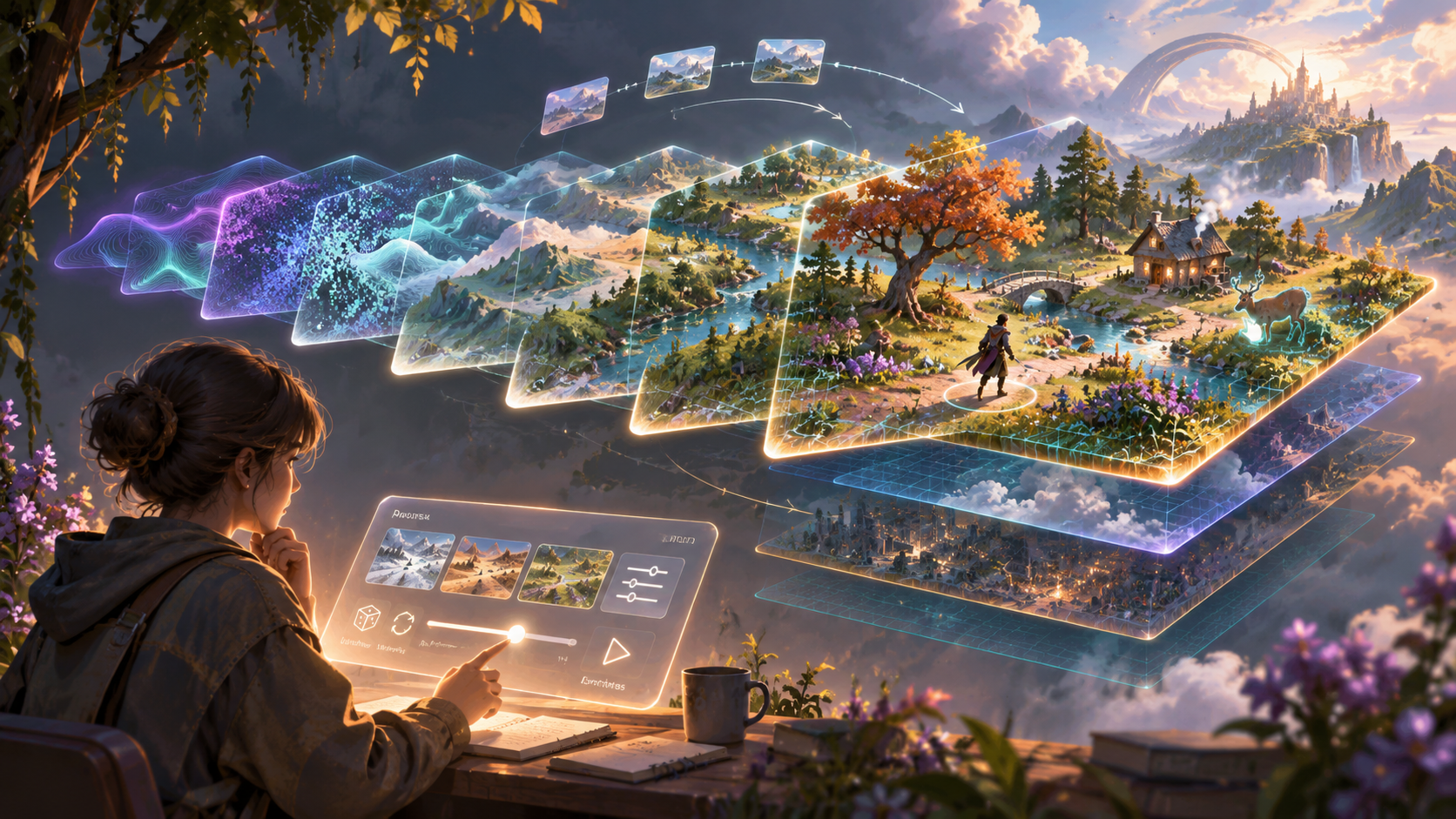
How do we measure a good world model? Frame quality alone is insufficient.
We need to consider temporal consistency, action responsiveness, object permanence, causal plausibility, controllability, and the duration over which a scene remains coherent.
For robotics, physical accuracy matters. For filmmaking, visual continuity and creative control may matter more. For games, reproducibility and player agency become central.
Different applications demand different definitions of success.
My perspective
I find world models particularly exciting because they intersect with projects involving simulations, games, and intelligent agents. They invite us to ask whether some environments can be learned rather than entirely hand-programmed.
Still, I don't expect traditional simulation engines to disappear. Structured rules remain extremely valuable when correctness and repeatability matter.
The interesting future may be a collaboration between worlds we explicitly program and worlds AI can learn to imagine.